Emma Rosa
Devon, UK
Emma Rosa is a textile artist whose practice explores the intersection of botany, observation, and material transformation. Working primarily with fabric and thread, she creates intricate sculptural works that capture the fleeting states of plant life, from emergence to decay. Rooted in close study of natural specimens, her work draws on the traditions of botanical illustration while reinterpreting them through a contemporary textile language.
Combining machine embroidery with traditional Somebana techniques and self-taught experimentation, Rosa manipulates silks and threads into highly detailed, lifelike forms. Each piece reflects a sensitivity to structure, texture, and seasonality, often focusing on overlooked or native species. Her background in fine art and dressmaking informs a process that balances technical precision with experimentation.
Through her work, Rosa invites a slower, more attentive way of seeing, encouraging a renewed appreciation for the fragility and complexity of the natural world.

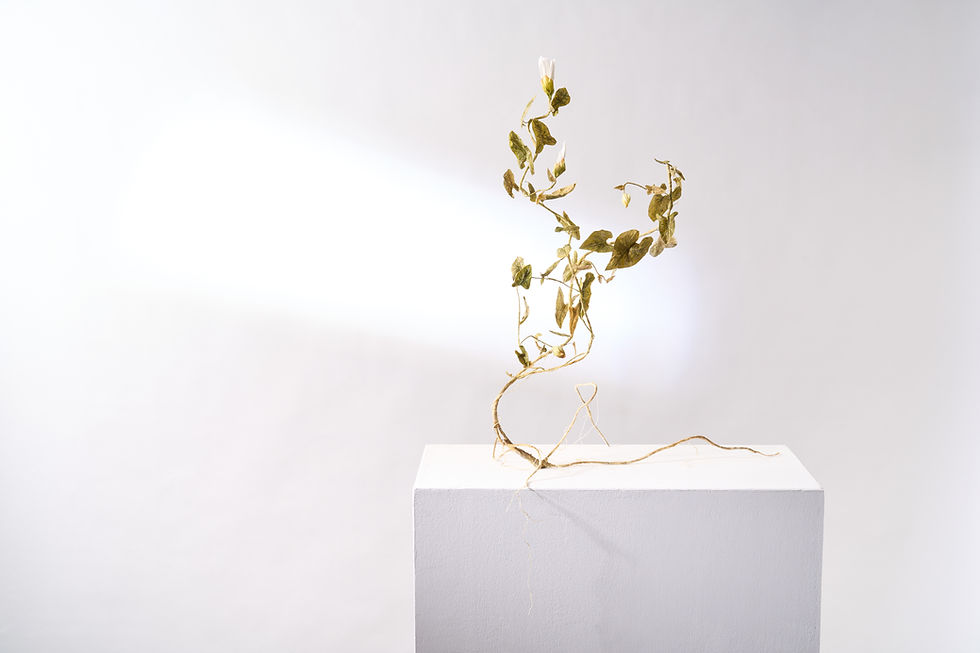
'Creep', silk, thread and ink, h. 42 cm

When did you first work with textiles in art?
"After a background in Fine Art, a career in dressmaking, then a break to start a family, I returned to my sewing machine in 2019, and began to experiment with manipulating fabric and thread into botanical studies."
How does the location of your studio/home come into your work?
"A move to rural Mid Devon in the same year became the biggest catalyst for my work. My garden studio is nestled in the heart of the countryside, and I have all the subject matter I need in the hedgerows and fields that surround me. I relish the turning of seasons, and keenly observe the changes that take place throughout the year."


Do you listen to anything as you work?
"I am a big fan of Audio Books, and can become very immersed in listening to some pretty epic tomes while my hands are busy! I have recently worked my way through Hilary Mantel’s ‘Wolf Hall’ series, and the tone and despair of these historical novels complimented my latest collection for this exhibition, as I became interested in the last ‘dying’ stages of plants."